Build a sound foundation
Large language models, useful prompts, context, review, and responsible use.
AI Foundations · 70 min
A curated field guide for educators exploring AI tools, agentic systems, classroom practice, assessment, and institutional policy.

The tool can assist. The educator still decides what matters.
The central question
“Can AI produce an answer?” is no longer the interesting question. The question is how to use it without surrendering judgment, creativity, disciplinary knowledge, or productive struggle.
Do not try to consume everything. Follow the sequence, try one authentic task at each stage, and decide what deserves deeper attention.
Large language models, useful prompts, context, review, and responsible use.
AI Foundations · 70 min 9 min
9 min
Turn trusted material into overviews, mind maps, quizzes, and active recall.
NotebookLM study system 11 min
Agents, skills, MCP, sub-agents, and persistent project instructions.
IBM Technology explainer 22 min
Give an agent a goal, files, tools, and permission to complete a multi-step task.
 10 min
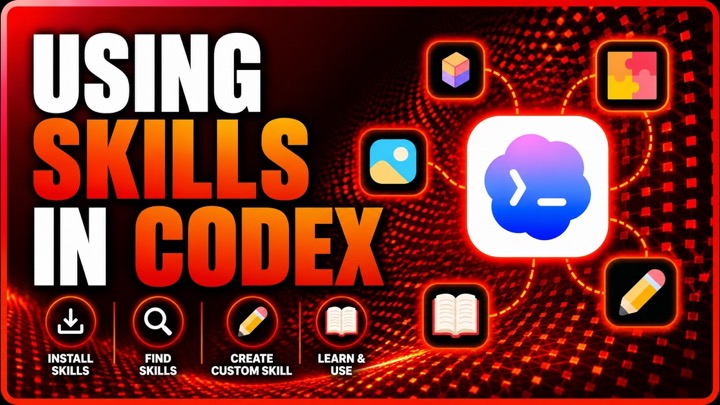
Find, install, invoke, inspect, and create Codex skills for repeatable workflows.
Codex Skills explained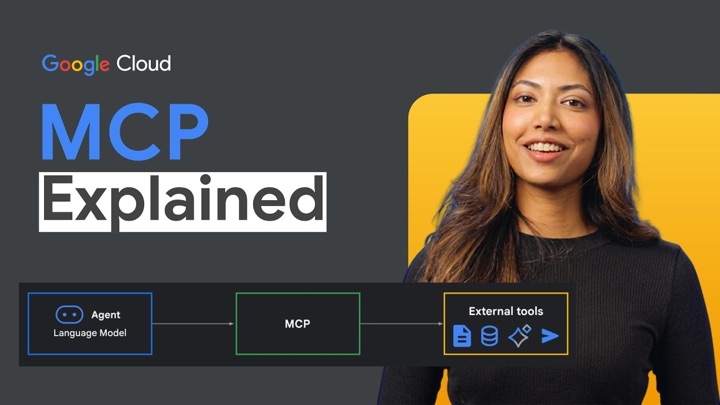 8 min
8 min
MCP links AI applications with external tools, data, and workflows.
MCP explainedStudent-facing use must follow district approval, privacy requirements, product terms, and age restrictions—not merely the technical availability of a website.
Product availability does not override school or district policy.
For Grade 6, begin with teacher-led demonstration using district-approved tools and non-identifying material. Keep student reasoning on paper or in discussion, and confirm any direct student use with the school or district.
Start with conversation, move into creation, and then study the systems that let AI plan, act, observe, and adjust.
A concise introduction to effective conversational use before moving from one-off questions to sustained workflows.
A practical Futurepedia walkthrough. Use it for workflow ideas rather than memorizing an interface that will keep changing.
A source-grounded research and study environment with citations, study guides, audio overviews, mind maps, and quizzes.
An adult developer environment for experimenting with Gemini models, prompts, multimodal inputs, structured output, and prototype applications.
A free, open-source code editor and useful home base for experimenting with files, extensions, code, and coding agents.
Works with projects, inspects and edits files, runs commands, researches, tests its work, and reports results.
Anthropic’s agentic coding tool. The selected tutorial begins in the desktop app rather than the terminal.
The official introduction to the open standard connecting AI applications with data sources, tools, and workflows.
Anthropic’s useful distinction between fixed workflows and agents that choose their own actions, with an emphasis on simple composable systems.
Compare AI agents, conventional rules, machine learning, and human judgment before deciding AI is the right tool.
Product interfaces age quickly. Prefer recent videos, then verify important details in the official documentation.
 25 min
Futurepedia · practical beginner walkthrough
 28 min
Futurepedia · adult developer exploration
22 min
Futurepedia · beginner to advanced
10 min
OOP Coders · June 11, 2026 · recommended next step
 22 min
Leon van Zyl · build without starting in a terminal
8 min
Google Cloud Tech · tools, data, and workflows
 11 min
IBM Technology · AI agents vs rules vs ML
The goal is not faster answers. It is stronger explanation, verification, challenge, and responsibility for the mathematics.
The best local starting point: district considerations, a plain-language glossary, curriculum connections, resources for families and students, and BC teaching-and-learning stories.
The current local direction on equity, safety, student well-being, and the distinction between secondary rollout and elementary exploration.
AI literacy as human agency, ethics, critical judgment, technical foundations, and responsible design—not merely prompting.
A professional-learning map across human-centred practice, ethics, AI foundations, pedagogy, and ongoing development.
A practical vendor course on prompting, lesson planning, rubrics, communication, critical review, privacy, and human oversight. It supports teacher learning; it is not permission for student use.
Use current provincial and university guidance for policy, then treat vendor research and product case studies as useful—but interested—evidence.
A directly relevant 2026 provincial resource covering institutional policy, responsible teaching and learning, privacy, accessibility, transparency, and attribution.
Practical faculty guidance on course design, learning activities, feedback, assessment, approved tools, and privacy review.
Assessment redesign centred on critical thinking, knowledge application, academic integrity, and clear student expectations.
A human-centred policy reference covering privacy, age-appropriate use, ethics, regulation, pedagogy, and long-term implications.
A 42-minute Anthropic discussion of personalized learning and assessment alongside deeper questions about what students should learn.
Vendor perspectiveAn empirical snapshot of higher-education use across teaching, research, administration, custom tools, and grading. Read the methodology critically.
Vendor researchA short way to identify tasks where AI can assist while preserving disciplinary knowledge and teaching judgment.
Vendor guideAn emerging institutional model: campus access, learning mode, guided questioning, administrative use, and university-wide governance.
Product case studyA mix of primary product sources, conceptual explainers, and practical independent tutorials.
Primary-source product announcements, demonstrations, research, and official examples.
Visit channelPrimary-source material on Claude, Claude Code, agents, MCP, safety, and education.
Visit channelAccessible walkthroughs of fast-moving tools. Expect promotions and check publication dates.
Visit channelPractical coding-agent experiments and examples of building working software from ideas.
Visit channelShort conceptual explanations of agents, language models, RAG, MCP, security, and system design.
Visit channelOfficial channels are strongest for current product behaviour, but naturally present the vendor’s perspective. Independent tutorials are often more practical, but may contain sponsorships, affiliate links, or quickly aging advice. Both are valuable when read critically.